Stress and addiction are closely linked, with chronic stress being a significant risk factor for substance abuse. Stress can stem from various sources—such as trauma, financial hardship, or work pressure—and when left unmanaged, it can increase vulnerability to addiction. Effective stress management is a crucial component of addiction recovery, helping individuals maintain sobriety and improve their overall well-being. Northstar Recovery Center addresses this connection through personalized treatment plans that include day treatment, intensive outpatient programs, virtual therapy options, and dual diagnosis care for co-occurring mental health disorders. These programs use evidence-based approaches like cognitive behavioral therapy, dialectical behavioral therapy, and holistic practices to teach clients the skills needed to manage stress and support lasting recovery.
What is the Relationship Between Stress and Addiction?
Stress is something we all experience. However, when stress is prolonged, it can start to have severe and detrimental impacts on your mental and physical health. Many people find that learning how to manage stress more effectively is an essential part of their addiction recovery journey. As a result, stress management is one of the many things we help clients with here at Northstar Recovery Center. So, what is the relationship between stress and addiction? How can treatment help?
What is the Relationship Between Stress and Addiction?
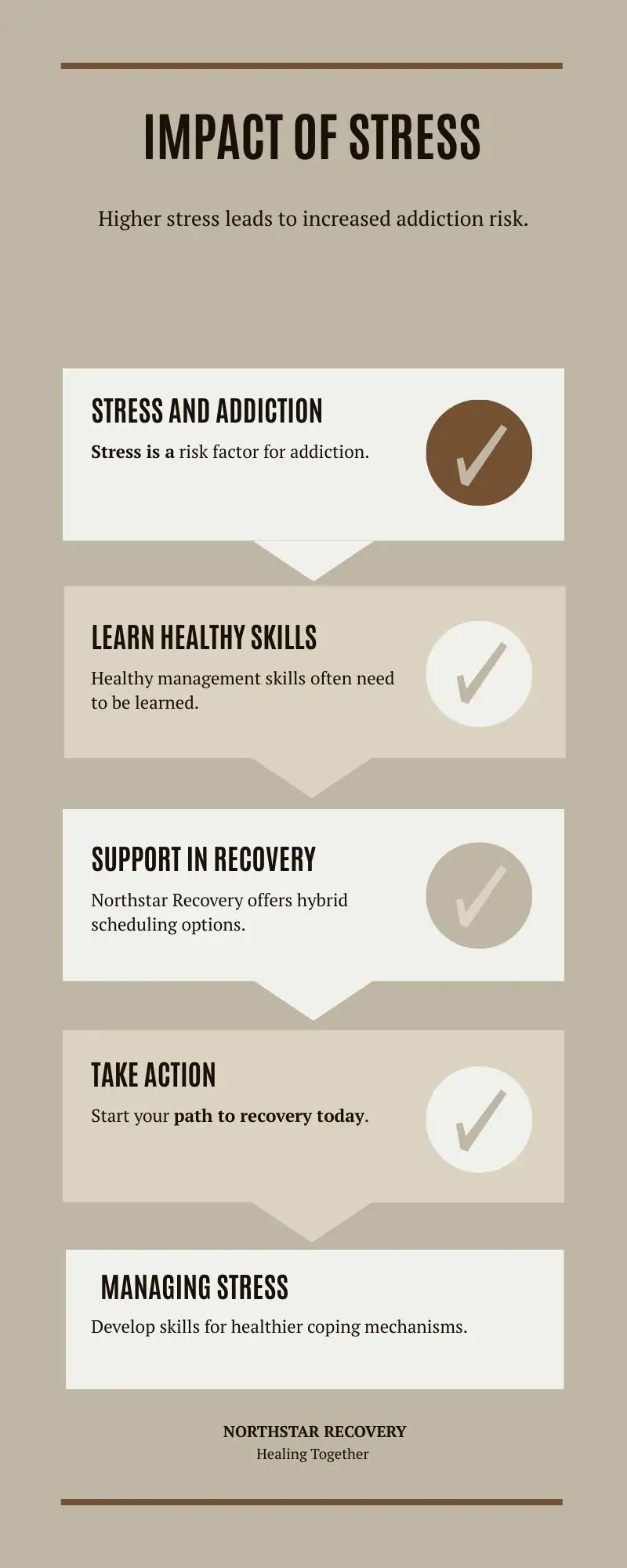
First, what is the relationship between stress and addiction? Stress is a known risk factor for substance abuse. This is particularly true when it comes to chronic stress, which refers to repeated or ongoing stress. The more stressors you have been exposed to, the more likely you are to develop addiction. Stressors can take different forms, from traumatic or adverse events, like abuse, bullying, or the loss of a loved one, to work stress and financial stress.
Managing stress in addiction recovery can help support your overall well-being, quality of life, and sobriety. When you have the tools you need to cope with stress, it helps you avoid the negative effects that prolonged, unaddressed stress can have on your health. However, healthy stress management skills are often something you will need to invest time and care in learning; most of us are not taught these skills in school or as we grow up.
That’s where treatment comes in. Northstar Recovery is here to teach you the stress management skills you need to get through triggers and navigate everyday life situations confidently. We offer hybrid, in-person, and virtual scheduling so that individuals and families healing from substance abuse and co-occurring disorders can access the care they need.
Flexible and Effective Addiction Treatment
Northstar Recovery Center provides flexible and effective addiction treatment, with multiple program options available. All clients receive personalized treatment plans: We employ a wide range of therapies to aid stress management and other recovery goals.
Addiction Day Treatment Programs In Massachusetts
Day treatment is more intensive than a typical outpatient program. Our addiction day treatment program in Massachusetts is highly structured. During the program, you’ll participate in group therapy, individual therapy sessions, recovery meetings (e.g., 12-step), and other activities that help you learn stress management and addiction recovery skills. We use methods such as cognitive behavioral therapy and dialectical behavioral therapy, which can provide you with techniques that make you feel confident in managing daily life stress long after treatment is over. Our team also teaches practices such as yoga and creative coping skills, which can be helpful for coping with stressors. Used in conjunction with one another, these treatments support our commitment to whole-person care.
Intensive Outpatient Program In Massachusetts
Our intensive outpatient program is the next step down from our day treatment program in terms of intensity. The same effective treatment methods are used, but the overall time commitment is lower. Sessions last for three hours per treatment day, which can be more manageable for clients who are currently working or who are returning to work after day treatment. We offer multiple IOP schedules, including morning, afternoon, and evening options. You can step down to IOP following day treatment, or you can enter IOP as a starting level of care.
Virtual Addiction Treatment In Massachusetts
Sometimes, people lead busy or high-stress lives that make it more challenging to participate in treatment in person. That’s why we offer virtual addiction treatment in Massachusetts. The evidence-based treatment and compassionate care for which our centers are known remain, but sessions are conducted online rather than in person. This cuts the commute time out of your day and makes treatment accessible to a wider range of prospective clients.
Dual Diagnosis Treatment Center In Massachusetts
Many people with a substance addiction have one or more co-occurring mental health disorders. Often, mental health conditions contribute to stress. For example, anxiety, depression, or trauma symptoms can take a toll on your well-being and quality of life. Our dual diagnosis treatment center in Massachusetts treats addiction and co-occurring disorders comprehensively so that you will have the spectrum of tools you need to take care of yourself and work through your unique life stressors, including those that relate to co-occurring disorders.
Call Northstar Recovery Center for Evidence-Based Addiction Treatment in MA
Northstar Recovery Center is a treatment facility with top-rated programs in West Springfield and Southborough, Massachusetts. Our center takes a comprehensive approach to addiction recovery, which involves learning skills you can use to address stress and other challenges that might arise in your life. Call Northstar Recovery Center for evidence-based addiction treatment in MA today at (833) 853-8153.
Frequently Asked Questions (FAQs)
What are some coping skills for stress management in addiction recovery?
When it comes to stress management, it is ideal to have multiple tools in your toolkit. Here are some coping skills you might try:
- Breathing exercises. Deep breathing can help you reduce stress and anxiety. They are also free and accessible, making breathing exercises a popular coping skill.
- Seeking social support. Strengthening your support network can help you manage stress. To build your support network, you may turn to support groups, treatment providers, friends, and family members.
- Physical activity. Exercise has been shown to lower physical and mental markers of stress. Whether it is walking, yoga, swimming, or something else, many people find that physical activity helps them unwind and care for their mental health.
- Creative activities. Creative activities, such as journaling and visual arts, provide an opportunity for self-expression and can serve as a positive outlet for stress.
Problem-solving techniques can also help you cope with stress in addiction recovery. For example, if you have a problem causing ongoing stress in your life, you might explore solutions that will reduce the stress in the long term.
How does cognitive behavioral therapy help with stress and addiction?
Cognitive behavioral therapy (CBT) helps with stress and addiction by aiding behavior change and teaching you how to change unhelpful or maladaptive thoughts. In this type of therapy, techniques like cognitive reframing are used to help individuals manage stress and get through stressful situations.
Is there a specific type of therapy that is effective for managing stress?
Yes. Multiple types of therapy have been proven effective in reducing stress in research studies. For example, mindfulness-based therapies can aid stress management and help to treat individuals facing addiction. Behavioral therapies, like CBT and DBT, can also be highly beneficial. We use a combined approach that integrates multiple types of therapies effective for managing stress.